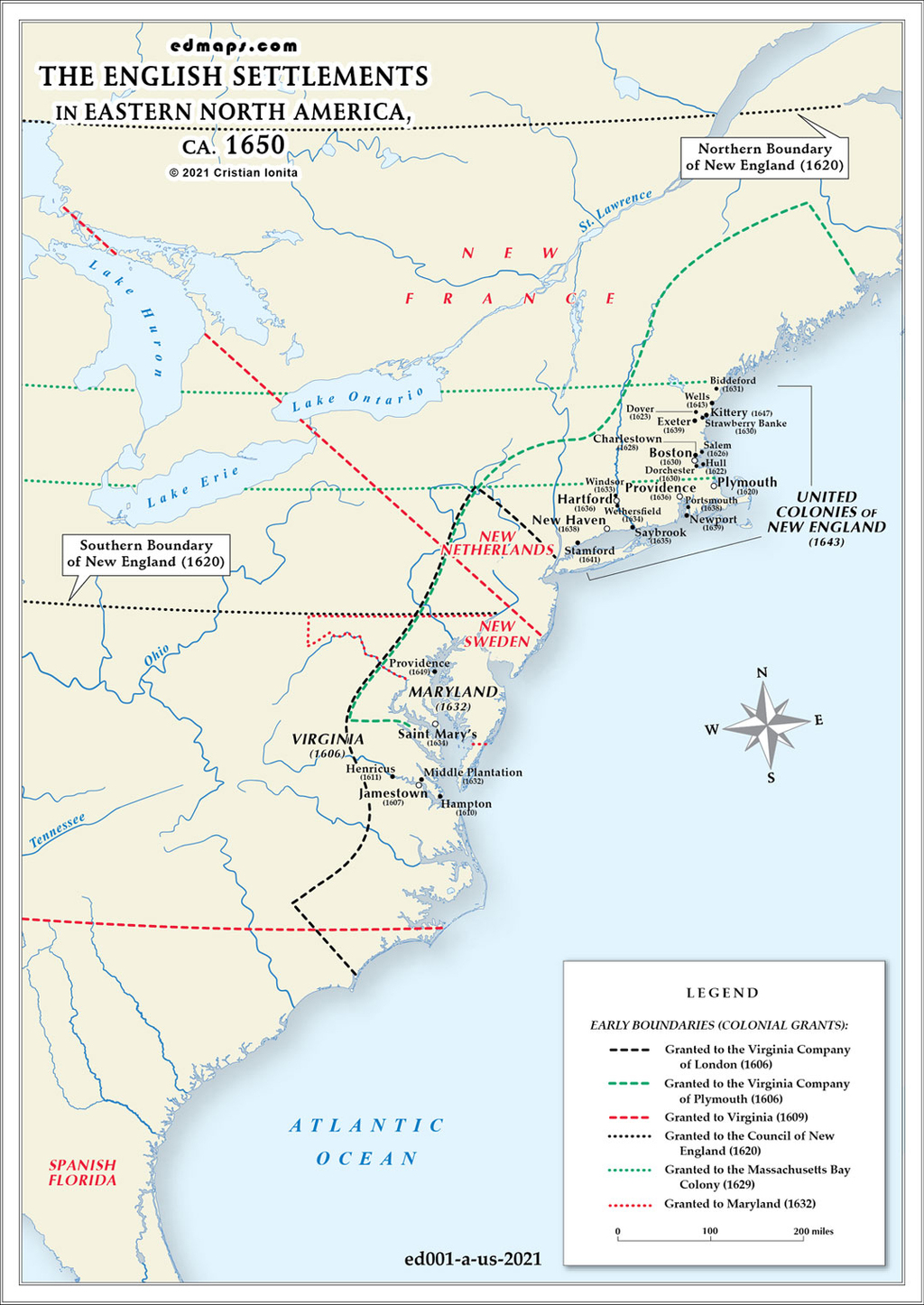
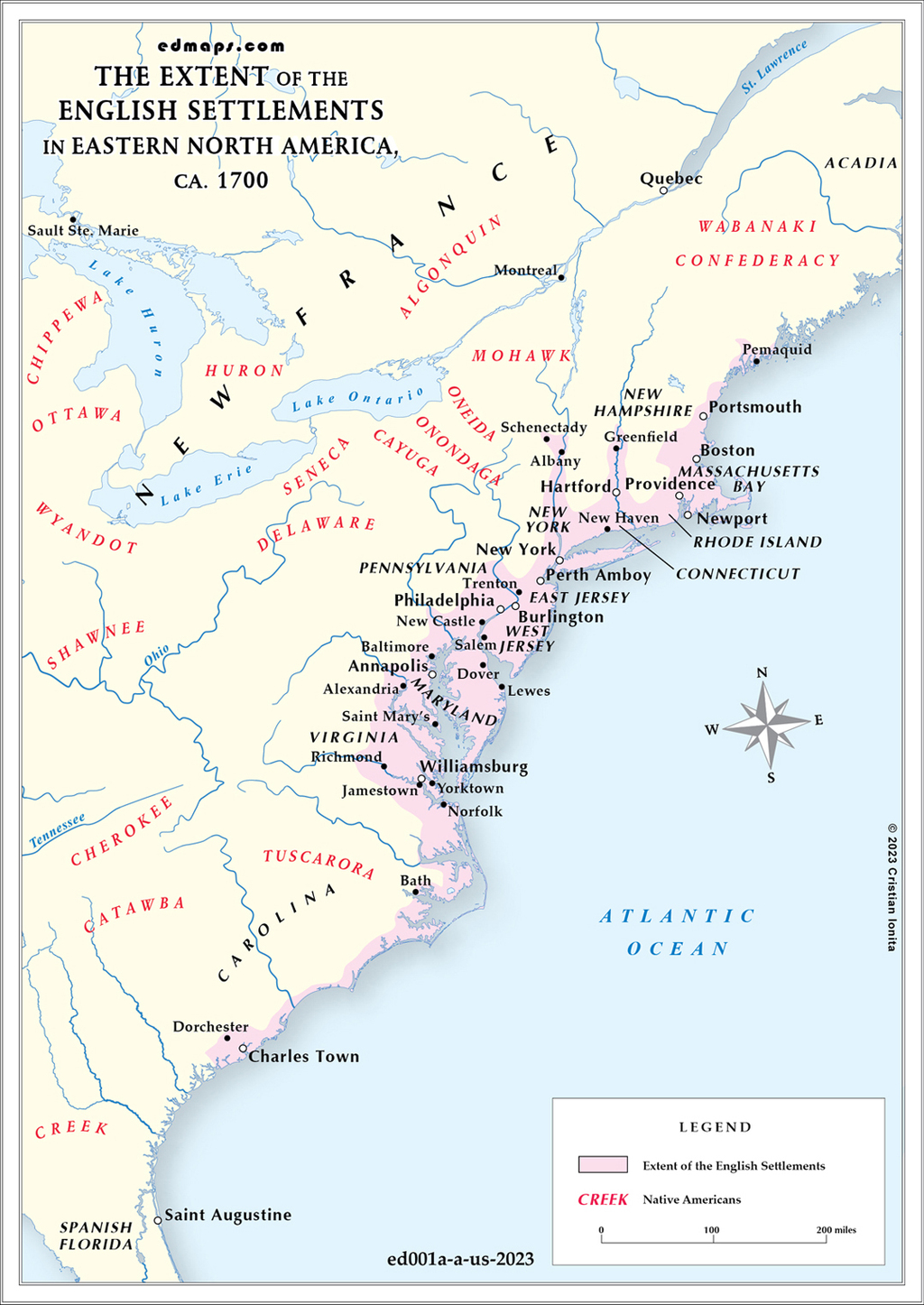
By 1770, the thirteen American colonies formed a rapidly growing and increasingly diverse population center within the British Empire. A combination of natural increase, sustained immigration from the British Isles and continental Europe, and expanding settlement patterns had transformed the demographic profile of British North America, creating a society far more populous and complex than it had been a decade earlier.
The administrative distinctions among the colonies remained intact. Royal colonies, such as Virginia, New York, and the Carolinas, continued to operate under governors appointed by the Crown, while proprietary colonies like Pennsylvania and Maryland maintained their semi‑autonomous structures under hereditary proprietors. Charter colonies, notably Rhode Island and Connecticut, preserved broad self‑governing privileges rooted in their original corporate foundations. Despite these differences, all thirteen colonies remained subject to imperial oversight, even as their internal political cultures grew increasingly assertive.
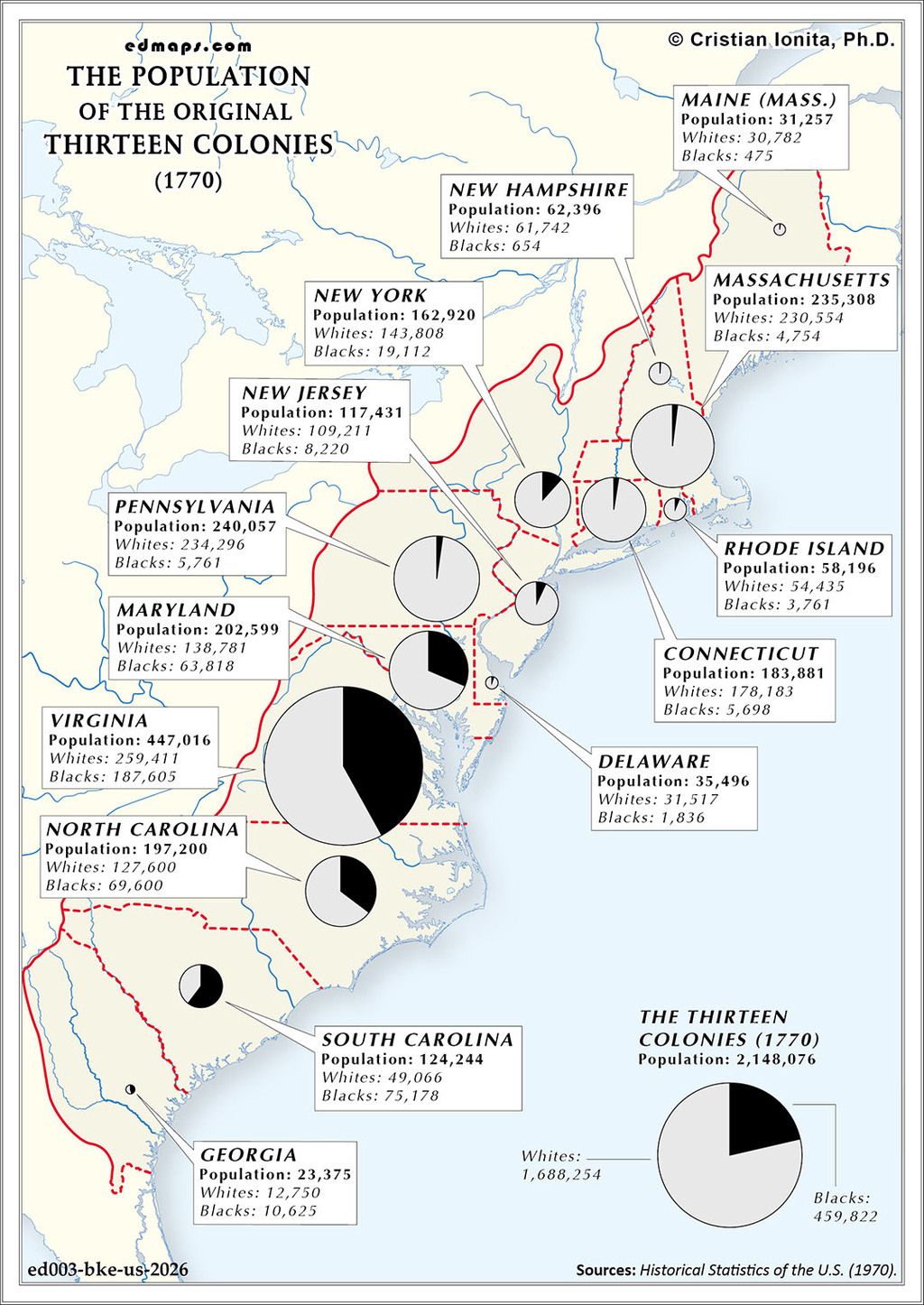
Population growth was uneven across the colonies. New England, with its high birth rates and stable rural communities, remained one of the most densely settled regions. The middle colonies, especially Pennsylvania, experienced dramatic expansion fueled by German, Scots‑Irish, and English immigration, producing some of the most ethnically and religiously diverse societies in North America. In the southern colonies, enslaved Africans formed a substantial proportion of the population, particularly in South Carolina and Virginia, where plantation agriculture shaped demographic patterns and social hierarchies.
Territorial pressures intensified as populations expanded. Settlers in New England and the middle colonies pushed into the interior valleys of New York and Pennsylvania, while Virginians and Carolinians advanced toward the Appalachian frontier. These movements often overlapped with Indigenous homelands and with competing colonial land claims, generating disputes that imperial authorities struggled to regulate. The Proclamation Line of 1763, intended to restrain westward settlement, was increasingly ignored as demographic momentum carried colonists toward the Ohio Valley and beyond.
By 1770, the demographic scale of the colonies had become a defining feature of British North America. With a combined population exceeding two million inhabitants, the colonies represented a dynamic and expanding society whose internal diversity, regional contrasts, and territorial ambitions were beginning to challenge the administrative and political structures of the imperial system. The population distribution of this period reveals a continent in motion, shaped by migration, natural growth, and the persistent drive for land and opportunity.
Sources, Methodology & Educational Use: The maps presented on this page are original creations produced for edmaps.com by Dr. Cristian Ionita. Each map is based on verified historical data relating to the territorial evolution, administrative structures, and political history of the United States. The maps are designed according to established practices in historical cartography, including source analysis, period contextualization, and visual clarity. The collection is curated to support teaching, learning, and public understanding of the U.S. history, and is intended for educational and non‑commercial use.
edmaps.com — Historical Cartography for Education
edmaps.com provides original maps and curated historical maps designed to support teaching, learning, and public understanding of territorial evolution, political history, etc. The original maps are created by Dr. Cristian Ionita, and all curated maps are selected from public archives, historical collections, and private holdings, and are presented for educational and non‑commercial use.
© Cristian Ionita. All rights reserved.
Website: https://edmaps.com — Contact: info@edmaps.com